A car that suddenly sounds different is often trying to tell you something. Learning to recognize a few common noises can help you catch a problem before it turns into a breakdown.
Common Noises and What They Might Mean
- Grinding when braking — often worn brake pads making metal-to-metal contact
- Squealing on startup — frequently a loose or worn serpentine belt
- Knocking from the engine — can indicate anything from low oil to a more serious internal issue
- Clunking over bumps — often worn suspension components like struts or sway bar links
- Hissing after the car is turned off — can be a coolant or vacuum leak
When a Noise Means You Should Stop Driving
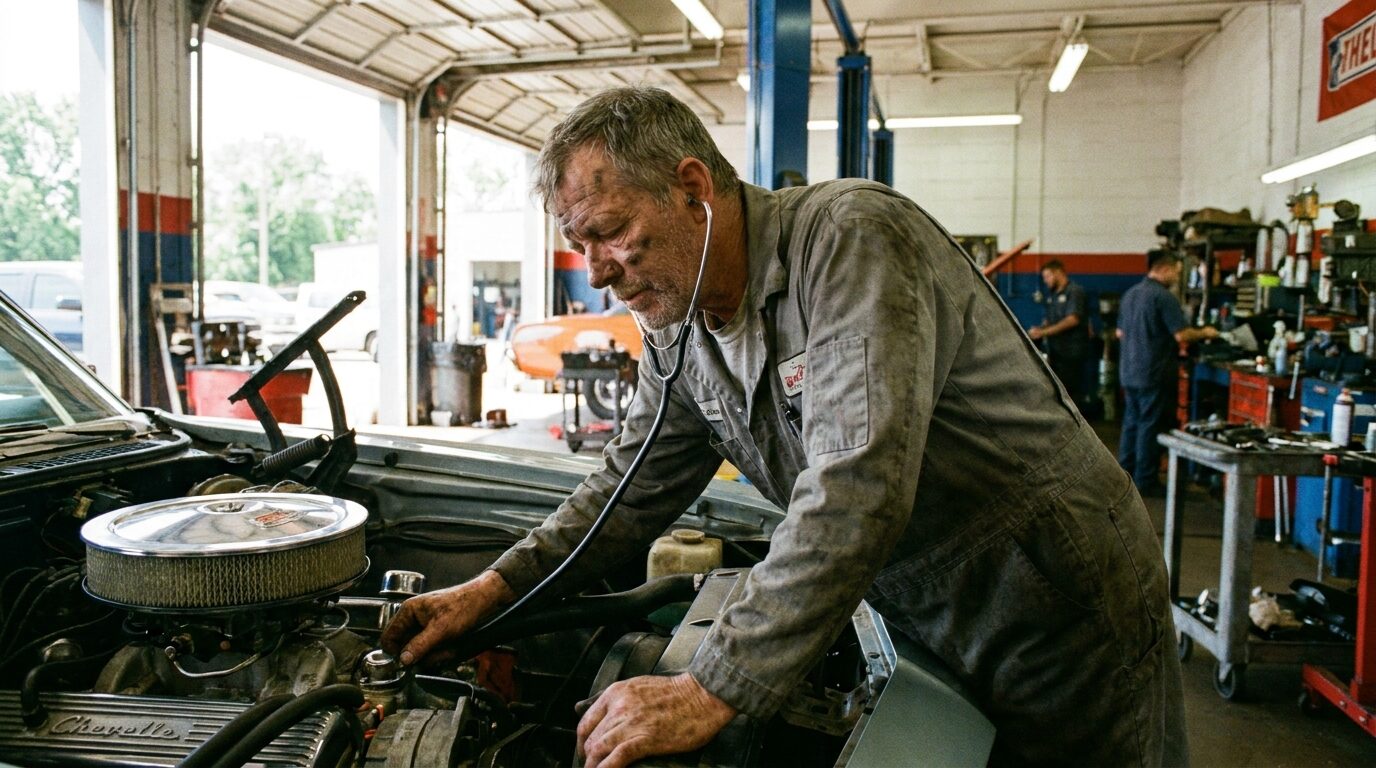
Loud knocking, grinding brakes, or any noise paired with a warning light or loss of power are signs to pull over rather than continue on. A noise that’s purely cosmetic, like a minor rattle, can usually wait for a scheduled appointment.
Frequently Asked Questions
Is it safe to keep driving with a squealing belt?
A squealing belt can usually be driven a short distance to a shop, but it should be addressed soon since a failed belt can leave you stranded.
What does grinding when braking usually mean?
It often means the brake pads are worn down to metal, which affects stopping power and should be addressed right away.
What should I do if my car makes a loud noise and won’t move?
Turn off the engine, stay safe, and call for a tow rather than trying to force it to keep running.
If a strange noise leaves you stuck anywhere around Springfield, MO, Springfield Towing Service is available 24/7. Contact us at (417) 243-9938.