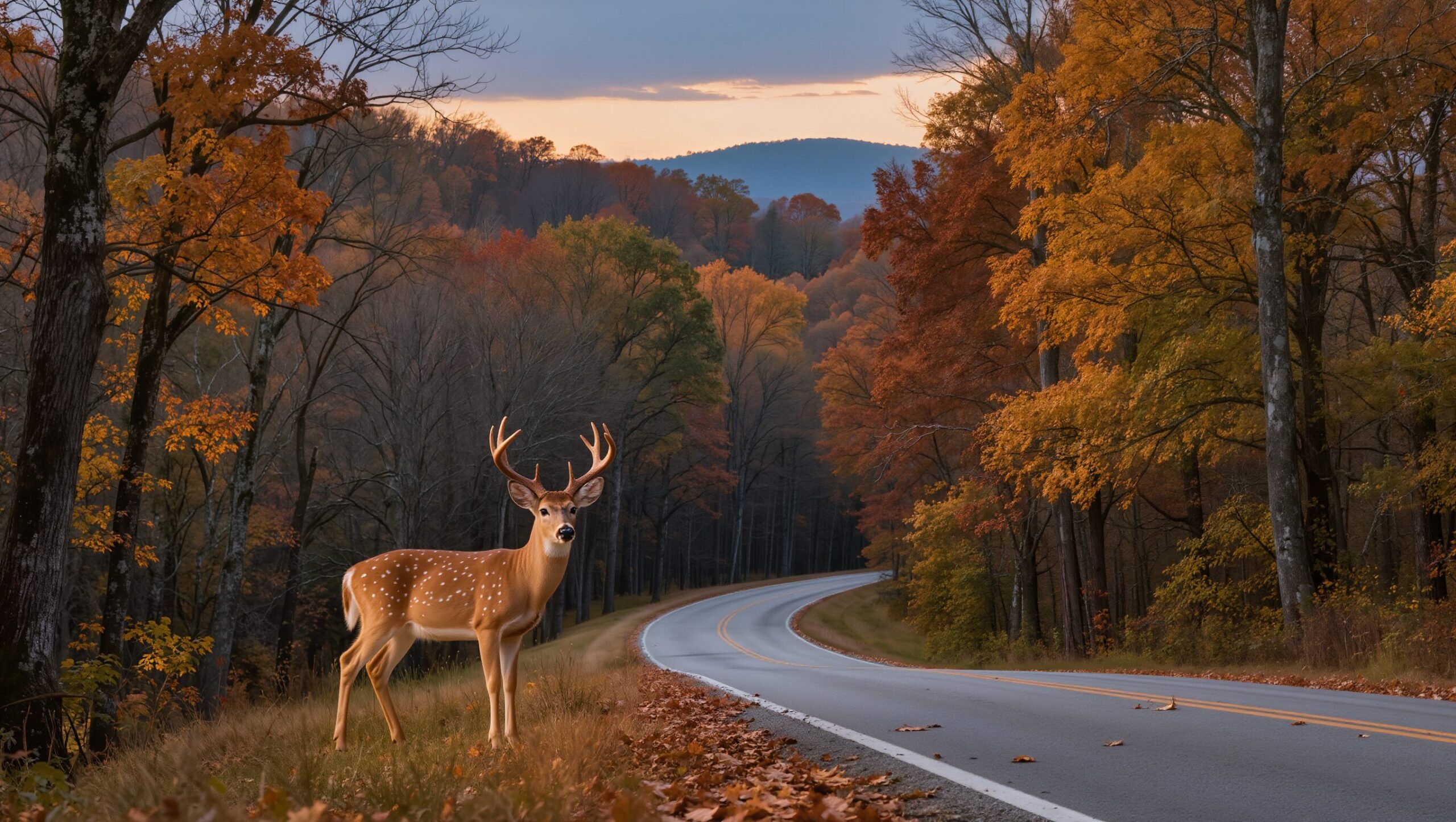
Rural Ozark roads see some of the highest deer activity in the state every fall, and the winding, tree-lined nature of these roads makes spotting a deer in time genuinely harder than on open highway.
Why November Is the Peak
- Deer breeding season (the rut) runs October through December, when deer move far more than usual
- Missouri consistently ranks in the top 15 states nationally for deer-vehicle collisions
- Most strikes happen at dawn (6-7am) and dusk (6-9pm), overlapping with rural commute times
Rural Roads Add Extra Risk
Winding roads with limited sightlines give drivers less warning time than a straight highway would, and dense treeline right up to the shoulder gives deer more cover to appear suddenly.
What Actually Helps
Slow down and use high beams when there is no oncoming traffic, and never swerve to avoid a deer — most serious injuries happen when a driver swerves and hits something else instead.
Frequently Asked Questions
Why are rural Ozark roads riskier for deer strikes?
Winding roads with limited sightlines give less warning time, and dense treeline gives deer more cover right up to the road.
What time of day is riskiest?
Dawn (6-7am) and dusk (6-9pm) during October through December.
Should I swerve to avoid a deer?
No — most serious deer-crash injuries happen when a driver swerves and hits something else instead.
Need help with this near Springfield? Springfield Towing Service covers Springfield, Nixa, Ozark, Republic, Strafford, Rogersville, and Willard. Contact us at (417) 243-9938.