Backroads across the Ozarks are full of low-water crossings, and they flood fast after a hard rain — often faster than drivers expect on a road they cross every day without a second thought.
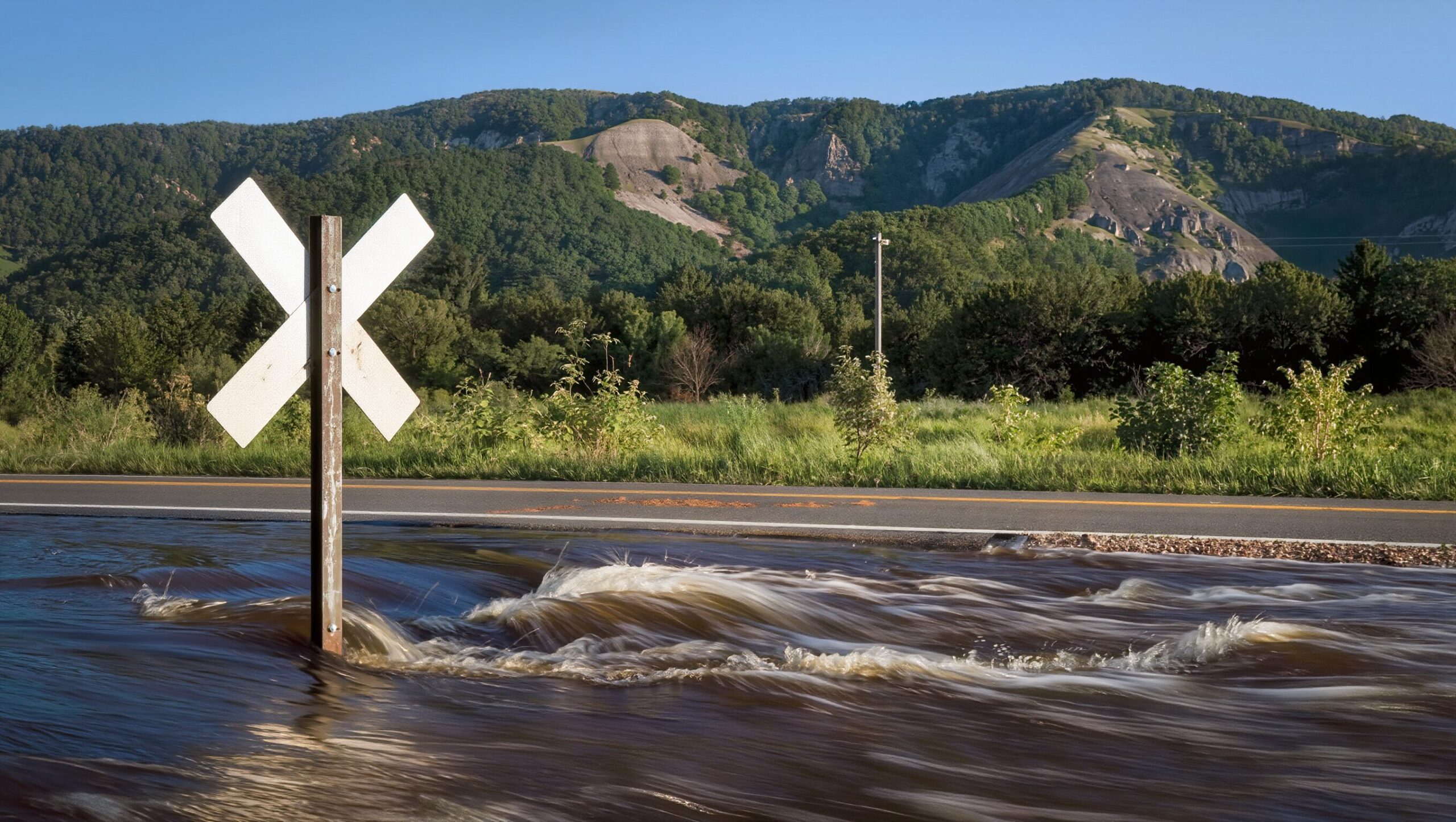
Why These Crossings Are So Dangerous
- Just two feet of moving water can carry away most vehicles
- Water depth is often impossible to judge accurately from inside a car
- Crossings can flood quickly during heavy or fast-moving storms, even ones that seem to pass quickly
The Ozarks Make This Worse
Steep terrain and rocky ground mean rain runs off fast into low areas instead of soaking in gradually, so a crossing that was dry an hour ago can be genuinely dangerous by the time you reach it.
What to Actually Do
If you cannot clearly see the bottom or you are not certain of the depth, turn around and find another route — it is never worth the ten minutes saved. If your car does stall in water, get out and to higher ground rather than staying with the vehicle.
Frequently Asked Questions
How much water can actually move a car?
As little as two feet of moving water can carry away most vehicles — low-water crossings are more dangerous than they look.
Why do Ozark crossings flood so fast?
Steep, rocky terrain means rain runs off quickly into low areas instead of soaking in gradually.
What should I do if my car stalls in water?
Get out and to higher ground rather than staying with the vehicle — do not try to push or restart it.
Need help with this near Springfield? Springfield Towing Service covers Springfield, Nixa, Ozark, Republic, Strafford, Rogersville, and Willard. Contact us at (417) 243-9938.