AWD and 4WD vehicles are built to send power to all four wheels at once, which means towing them the wrong way can strain the drivetrain. This is especially relevant around Springfield and the surrounding hill country, where AWD and 4WD vehicles are common.
Why AWD/4WD Vehicles Need Special Handling
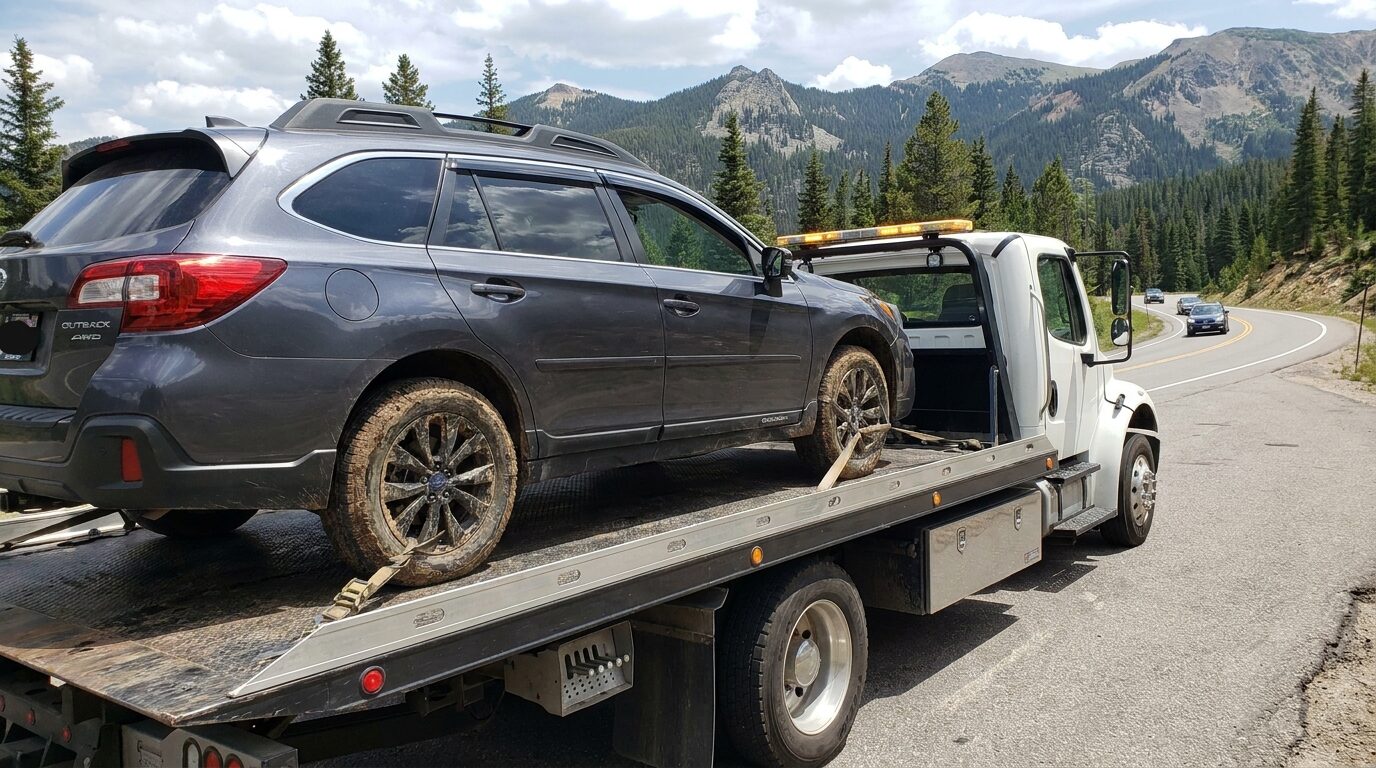
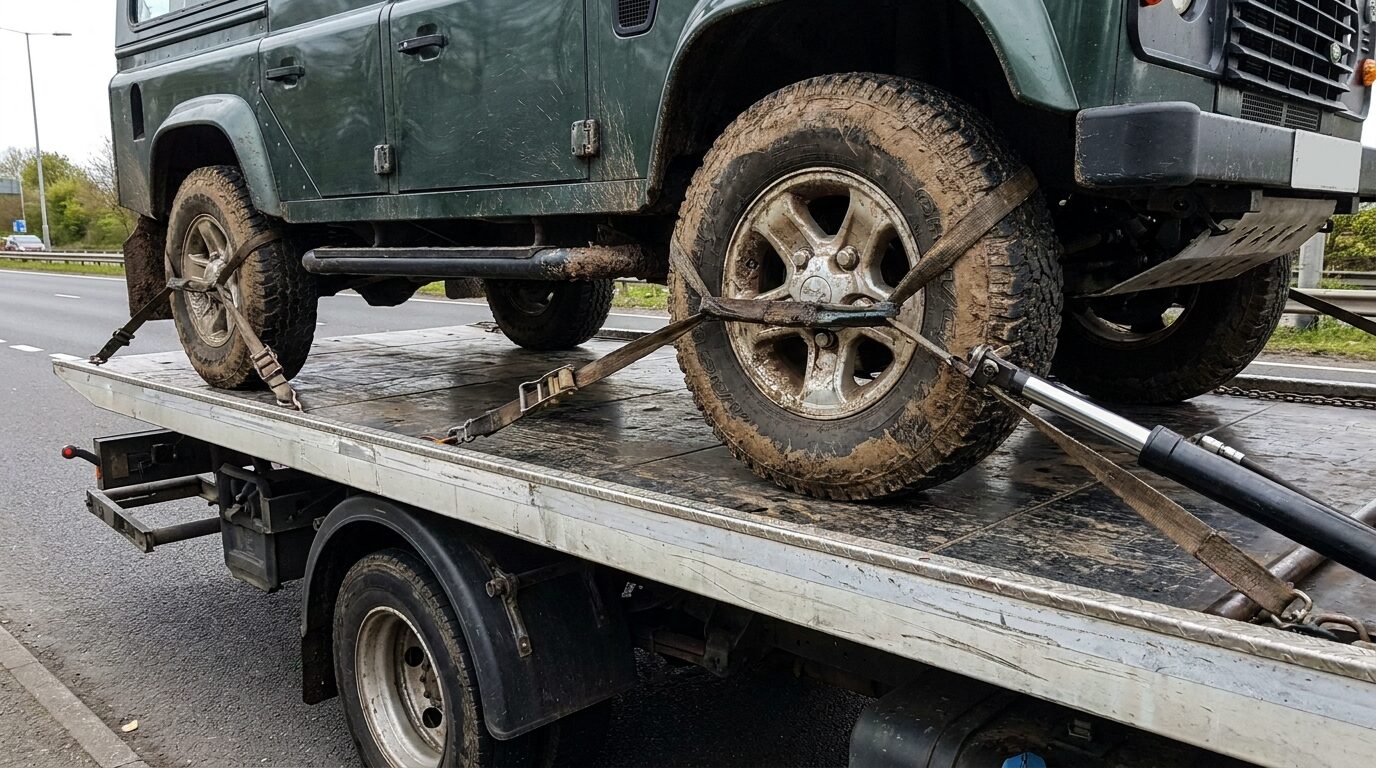
On a typical two-wheel-drive car, a wheel-lift truck can safely lift the drive wheels and roll the others on the ground. With AWD and 4WD vehicles, all four wheels are connected through the drivetrain, so leaving any wheels on the ground while towing can send stress through parts that were not designed for it. A flatbed, which lifts the entire vehicle off the ground, avoids this problem entirely.
Signs Your Vehicle Needs Flatbed Towing
- The owner’s manual specifies flatbed-only towing for AWD/4WD models
- The vehicle has a viscous coupling or locking center differential connecting front and rear axles
- You’re not sure whether the transfer case can be set to neutral
- The vehicle is a newer model where drivetrain components are less tolerant of towing stress
What to Tell Dispatch
Let the dispatcher know your vehicle is AWD or 4WD when you call. This is enough for most towing companies to automatically send a flatbed rather than a wheel-lift truck, avoiding any back-and-forth once the driver arrives.
Frequently Asked Questions
Can any tow truck handle an AWD vehicle?
A flatbed is the safest choice for most AWD and 4WD vehicles, since it avoids putting stress on the drivetrain.
Is towing an AWD car more expensive?
Not usually — flatbed towing is standard practice and priced the same as other towing methods in most cases.
What if I don’t know whether my car is AWD or 4WD?
Check your owner’s manual or the vehicle badge — when in doubt, mention it to dispatch and they can confirm what’s needed.
Need AWD or 4WD towing anywhere around Springfield, Nixa, Ozark, or Republic? Springfield Towing Service runs flatbed equipment ready to go. Contact us at (417) 243-9938.